Trucks move about half of all container shipments from the Port of Vancouver to facilities across the Lower Mainland, the port authority says.1 Every one of those moves starts with a truck the port has licensed, a driver with a pass, an appointment at a terminal gate and a chassis under the box.
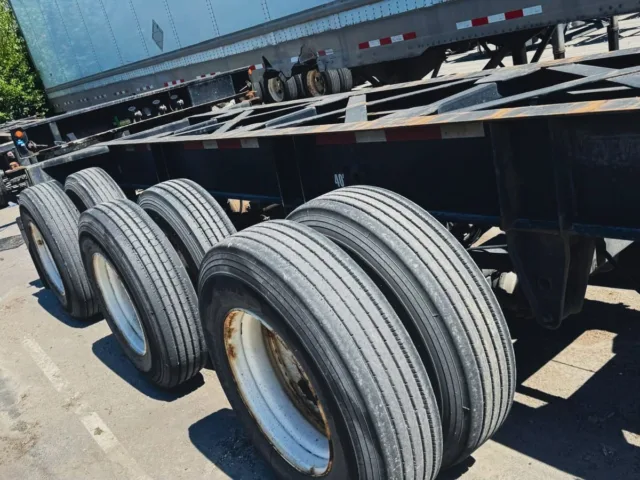
We offer chassis rental for the Port of Vancouver terminals, from our yard in Surrey. This playbook sets out what the province and the port’s Truck Licensing System require before a truck gets in, how the four container terminals differ, and how to plan the chassis for a peak week from your own numbers.
3.78million TEUs
through the four container terminals in 2025, up 9% on 2024
1.91million TEUs
imports (laden inbound), up 5%
816,000TEUs
exports (laden outbound), up 3%
The four container terminals
The port authority lists four container terminals: Deltaport at Roberts Bank in Delta, Centerm and Vanterm on the south shore of Burrard Inlet in Vancouver, and DP World Fraser Surrey on the Fraser River. Each is run by its operator, so gate hours, reservation systems and appointment rules come from the terminal, not the port authority.5 Our port drayage page draws the routes from our yard to each one.
The Port of Vancouver’s container terminals
| Deltaport | Centerm | Vanterm | DP World Fraser Surrey | |
|---|---|---|---|---|
| Where | Roberts Bank, Delta | South shore of Burrard Inlet, Vancouver | South shore of Burrard Inlet, Vancouver | Fraser River, Surrey |
| Operator | GCT Canada Limited Partnership | DP World Vancouver | GCT Canada Limited Partnership | DP World Fraser Surrey |
| What the port says | Canada’s largest container terminal: three berths, 12 ship-to-shore gantry cranes, extensive on-dock rail | Six gantry cranes on two berths, on-dock rail | Six gantry cranes, on-dock rail for containerized cargo | A multi-purpose terminal: containers, bulk and breakbulk |
| Port lands at the gates | Deltaport | South Shore | South Shore | Fraser Surrey |
| Our page | Chassis for Deltaport | Centerm and Vanterm | Centerm and Vanterm | Fraser Surrey Docks |
Vancouver Fraser Port Authority, “Cargo and terminals” and “Reminder: Truck Licensing System” (August 7, 2024); checked October 5, 2026. BC’s Container Trucking Regulation still names the Surrey terminal Fraser Surrey Docks.
Choose a terminal to trace its route.
- Deltaport, Roberts Bank, Delta
- Centerm, Burrard Inlet, Vancouver
- Vanterm, Burrard Inlet, Vancouver
- Fraser Surrey Docks, Surrey
- FromOur yard9616 188 Street, Surrey
- ToPort of VancouverContainer terminals
Getting in: the licences, the pass and the truck
Three layers of rules apply to a container move at the port: the province’s container trucking licence, the port authority’s Truck Licensing System (TLS), and the Port Pass the driver carries.
The container trucking licence
Under BC’s Container Trucking Act, nobody may carry out the prescribed container trucking services in the prescribed area without a licence from the Container Trucking Commissioner.8 The regulation fills in both: the services are container trucking that needs access to a marine terminal, and the area is the Lower Mainland, 20 municipalities from West Vancouver to Chilliwack, Surrey and Delta among them. The marine terminals it names are Centerm, Deltaport, Fraser Surrey Docks and Vanterm, plus any other container terminal that needs a port authority trucking authorization or access agreement.9
Two moves are outside the licence: a trucker working for a licensee in a truck with a truck tag issued by the Commissioner, and a container moved to or from a place outside the Lower Mainland.9
The port’s Truck Licensing System
The port authority’s TLS sets the criteria that every trucking company and its vehicles, local and long-haul, must meet before they can use federally owned port property. Its requirements include port GPS units on all trucks, a minimum truck age and common data interfaces with the terminals.1 Companies and trucks that meet the criteria are eligible for an Access Agreement under the TLS.2
The truck age rule, from January 1, 2025
“All additions, replacements, and returning trucks to any TLS fleet must meet the new minimum entrance requirement of a 2018 truck,” with compliant equipment or factory-installed emissions components. Trucks already in the TLS were not affected “at this time,” and all TLS trucks remain subject to periodic inspections.2
Questions about the truck age rules, for a truck already in a TLS fleet or one you’re adding, go to the port’s TLS Program Administration team at tls@portvancouver.com.2
The Port Pass
Anyone who needs access to port property more than five times a month or 12 times a year should have a valid Port Pass. For motor carriers over 5,000 kg, the card issuing authority that sponsors the pass is the BC Trucking Association.4 At the gates, every drayage truck heading for the South Shore, Deltaport or Fraser Surrey port lands must be approved by TLS before it arrives, and the driver must hold a valid Port Pass to get in.3
Check where you stand
Answer a few questions to see which of these rules you still need to meet. It reads the rules above; it can’t check your licence or your fleet.
Decision helper
Ready for the port gates?
Worked out in your browser; nothing is saved or sent.
If you answer
- Places in the Lower Mainland and My company does and Yes and Yes
- Places in the Lower Mainland and My company does and No, we’re adding it and Yes and Yes
- Places in the Lower Mainland and I drive for a licensed company, in its tagged truck and Yes
On these answers
You meet the rules this helper can check
Book through the terminal’s appointment system and arrive inside your window: trucks that arrive outside it must leave port property. The checklist below covers the rest.
If you answer
- Places in the Lower Mainland and Nobody yet
On these answers
A licence comes first
Apply to the BC Container Trucking Commissioner, and meet the port’s TLS criteria for an Access Agreement. Or drive for a licensee, in a truck with one of the Commissioner’s truck tags.
If you answer
- Places in the Lower Mainland and My company does and No, we’re adding it and No, it’s older
On these answers
This truck can’t join a TLS fleet
The TLS minimum entry requirement is a 2018 truck, with compliant or factory-installed emissions components. Ask the port’s TLS team about any exception.
If you answer
- Places in the Lower Mainland and My company does and Yes and No
- Places in the Lower Mainland and My company does and No, we’re adding it and Yes and No
- Places in the Lower Mainland and I drive for a licensed company, in its tagged truck and No
On these answers
The driver needs a Port Pass
For motor carriers over 5,000 kg, the BC Trucking Association is the card issuing authority that sponsors it.
If you answer
- Places outside the Lower Mainland (long haul)
On these answers
Long haul: the TLS still applies
The TLS covers long-haul trucking companies and their trucks too, before they use port property, and drivers still need a Port Pass at the gates.
A summary of the rules as of October 5, 2026, not legal advice: the port authority, the Commissioner and your Access Agreement decide.
Chassis for port work
Pick the chassis by the boxes, not the terminal. Our 40′ tridem takes 20 and 40 ft containers, the 20-40-45 tridem 20, 40 and 45 ft, the 40–53 extendable 20, 40 and 53 ft, and the 40′ gooseneck, a tandem, takes 40 ft boxes.
- Weight decides the axles. In a tractor semi-trailer, BC allows up to 17,000 kg on a tandem axle group and 24,000 kg on a tridem.10 Boxes that run heavy belong on a tridem; our guide to tridem vs tandem container chassis has a worksheet for checking a box.
- The CVI travels with the chassis. A container chassis is a semi-trailer: its decal sits on the outside of the lower front corner, runs to the last day of the 12th month after it was issued, and a copy of the inspection report is carried in the vehicle.12
- Chains, mostly not. Commercial vehicles carry chains from October 1 to April 30, but not in the Lower Mainland south of Horseshoe Bay and west of Hope, so most port runs are exempt. A box going east of Hope isn’t.11
- On our rental chassis: GPS on every rental unit (read our telematics notice), and 24/7 roadside help for rental customers: call 604-501-2233.
The peak-season chassis buffer
A peak week is mostly a chassis problem: boxes arrive together, sit longer, and every one of them needs a chassis under it until it comes back. Sizing the pool for an average week leaves you short at the peak; sizing it for the peak leaves chassis idle the rest of the year. The usual answer is a core pool for a normal week and a rental buffer for the peaks.
Size it: how many chassis for the peak?
Chassis in use is roughly the boxes you move a day times the days each box keeps a chassis, from pickup until the chassis is free again. Put in your own numbers for a normal week and your busiest one.
Worksheet: your numbers
Chassis for the peak, in your numbers
Your numbers stay in your browser; nothing is saved or sent.
Your result
Chassis to rent for the peak
—
Chassis in use at the peak
—
Chassis in use in a normal week
—
Spare in a normal week
—
Fill in your numbers to see the result.
A rough sizing from your own records: real weeks are lumpier, so leave yourself a margin you’re comfortable with.
Run it: the buffer, step by step
Find the pinch points
Pull the last 90 days of container turns, per diem and storage charges. Mark the worst weeks and count how many more chassis would have covered them.
Size the core pool for a normal week
Own, lease or lease-to-own the chassis that work every week. The worksheet’s “normal week” line is your starting point.
Add a rental buffer for the peaks
Rent the difference for the peak weeks, booked before they start, and let it go when the peak passes.
Split the pool by place
Keep the core at your yard and park the buffer where it saves the most empty kilometres between the terminals and your customers.
Keep the paperwork with each chassis
A current CVI decal, a copy of the inspection report and the registration, so a roadside check doesn’t cost the appointment.
Plan the swap, not the delay
Decide ahead who swaps a chassis that needs work, so the driver keeps the appointment and the box keeps moving.
Try it for two billing cycles
If per diem and storage drop the way your sizing said, keep the buffer. If not, change its size or where it sits.
Review every quarter
Re-run the worksheet with the last quarter’s numbers and resize the core and the buffer.
Renting or owning the core? The lease-to-own guide has a break-even against renting, on your own quotes.
Peak week: the port run checklist
The port’s own rules, and the habits that keep a peak week moving. The rows marked with a source are the port authority’s; the rest are good practice. Tick them as you go; your ticks stay in your browser, and you can print the list for the dispatch desk.
Dispatch desk
The port run checklist
Before the week, before each dispatch, on port property and at the end of the day.
18 items to check.
Sources checked 5 Oct 2026. The official sources govern; check them before you rely on a row.
Check the port’s own monitors
The port authority’s port insights page carries a supply chain visibility dashboard with container truck turn times, a truck gate fluidity monitor built on container truck GPS data, webcams, the container vessel line-up and the berth window schedule.6 Make it the first tab the dispatcher opens.
Guide · 9 min read
Tridem vs tandem container chassis: when the third axle pays
What BC’s axle-group limits mean for a tandem and a tridem container chassis, which boxes each one takes, and a quick way…
Page
Chassis for container truckers and drayage fleets working the Port of Vancouver terminals, quoted for the job.
FAQ
Port drayage questions
Do I need a container trucking licence to haul to Deltaport?
For container trucking that needs a Lower Mainland marine terminal, yes, from the BC Container Trucking Commissioner. The exceptions are a trucker working for a licensee in a truck with the Commissioner’s truck tag, and a container moved to or from a place outside the Lower Mainland (Container Trucking Regulation, s. 2).
Does my truck have to be a 2018 or newer?
For a truck added to, replacing one in or returning to a TLS fleet since January 1, 2025, yes. The port’s notice said trucks already in the TLS were not affected at that time.
Who needs a Port Pass?
Anyone who needs access to port property more than five times a month or 12 times a year, the port authority says. For motor carriers over 5,000 kg, the BC Trucking Association is the card issuing authority.
Which chassis do you rent for port work?
The 40′ tridem (20 and 40 ft boxes), the 20-40-45 tridem (20, 40 and 45 ft), the 40–53 extendable (20, 40 and 53 ft) and the 40′ gooseneck, a tandem (40 ft). See chassis rental.
Do I need chains for port runs?
Not in the Lower Mainland south of Horseshoe Bay and west of Hope. Elsewhere on BC highways, commercial vehicles carry chains from October 1 to April 30 (Motor Vehicle Act Regulations, s. 7.1635).
How is a chassis rental priced?
Every rental quote is custom: term, quantity, mileage, delivery and insurance all count. We don’t publish rates. How renting works explains what goes into a quote.