If you bought your truck first and have been pulling other people’s trailers, sooner or later the question becomes which trailer to buy. The four most people weigh are the dry van, the reefer, the flat deck and the step deck. Each one decides the freight you can take, the gear you carry and the rules you work under.
You can see what’s in stock now on our trailers for sale page. This guide goes type by type through what each trailer hauls and what to check on its spec sheet, with the BC rules that shape it. Then a helper narrows it down, and a checklist covers the paperwork before you pay.
Start with the freight, not the trailer
A trailer is a decision you’ll live with for years, so pick it for the freight you want to haul for years, not this week’s loads. Five questions do most of the work:
- What freight do I want to be hauling, and for which customers?
- Where do I have a skill or a relationship other carriers don’t?
- How does it load: at a dock, or from the side or above?
- What insurance and upkeep can I carry, month after month?
- What can I pay for it, up front or over time?
The four trailers side by side
| Dry van | Reefer | Flat deck | Step deck | |
|---|---|---|---|---|
| What it is | An enclosed box with rear doors | An insulated box with a refrigeration unit | An open deck at one height | An open deck: a short upper deck over the fifth wheel, a lower main deck behind |
| Hauls | Boxed and palletized general freight | Freight that must stay cold or warm, such as food | Lumber, steel, building materials and equipment | Machinery and loads too tall for a flat deck |
| Loads | From the rear, usually at a dock | From the rear, usually at a dock | From the sides or above, by forklift or crane | From the sides or above, by forklift, crane or ramps |
| Weather | Closed | Closed and insulated | Open: tarps when the load needs them | Open: tarps when the load needs them |
| Securing the load | Load bars or straps inside the box | Load bars or straps inside the box | Every load tied down | Every load tied down |
| Extra to run | Nothing beyond the trailer | The refrigeration unit, with its own fuel and service | Straps or chains, edge protection, tarps | Straps or chains, edge protection, tarps |
| Height to watch | The van’s own height | The van’s own height | Deck height plus the load | Lower deck height plus the load |
| We rent it | Yes | No | No | No |
How each type works, in general. Height: Commercial Transport Regulations s. 7.05; securement: Motor Vehicle Act Regulations, Division 35; checked October 5, 2026.
Dry van
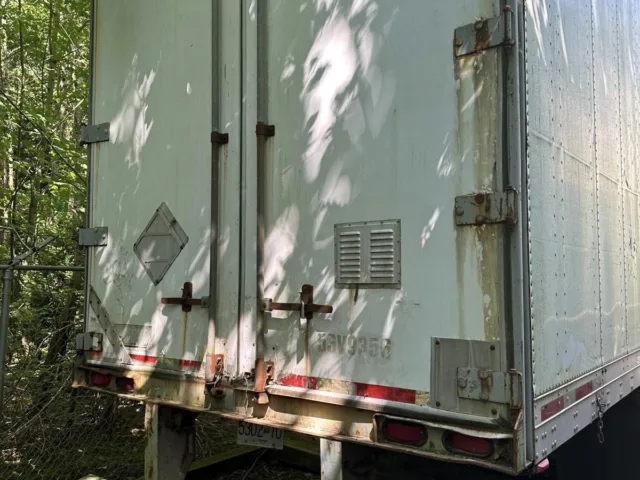
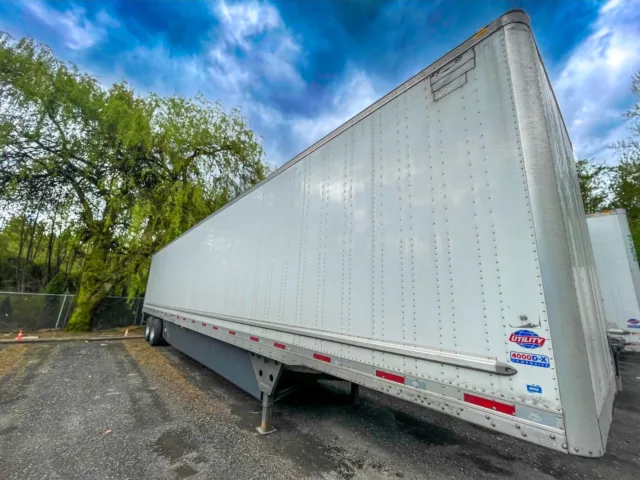
The dry van is an enclosed box loaded through the rear doors, usually at a dock. It carries most boxed and palletized freight, and it keeps the load out of the weather. Pick a van if most of what you’re offered is general freight that loads at a dock.
Its size is set by the rules for a tractor semi-trailer: in BC a semi-trailer may be up to 16.2 m long, just over 53 ft, and up to 4.15 m high with its load, without a permit.2 Two vans of the same length can still differ inside: ask for the inside length, width and door opening, the floor rating if forklifts drive in, and the posts or track that hold load bars and straps. Our dry van guide has the full spec sheet list, and we rent dry vans if you want to try a lane before you buy one.
Reefer
A reefer is an insulated van with a refrigeration unit, usually mounted on the front, that holds the load at a set temperature, cold or warm. It carries the freight a dry van can’t: food, produce and anything else that has to stay in a temperature range.
- The unit is a second machine to run. Ask for its hours, its service records and how it’s fuelled, and budget for its upkeep as well as the trailer’s.
- Length is measured without it. BC leaves a refrigerator unit attached to the front of a vehicle out of its length.1
- The box has to be clean. Ask your shippers what records they need: temperatures, cleaning, the loads before theirs.
Pick a reefer if you know temperature-controlled freight, or have customers who ship it, and can keep a second machine running.
Flat deck
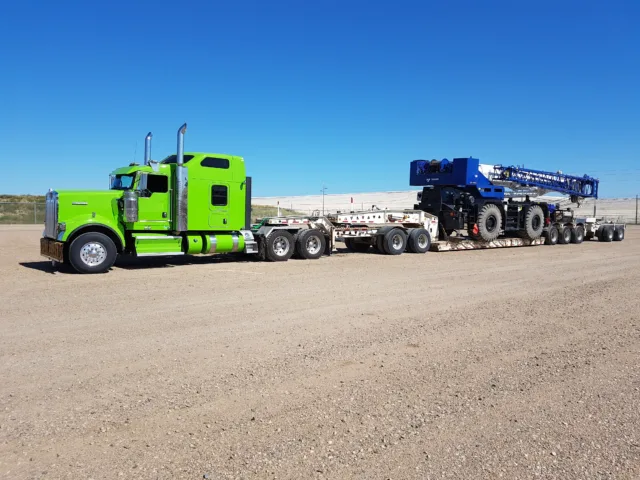
A flat deck, often called a flatbed, is an open deck at one height. Loads go on from the sides or above, by forklift or crane: lumber, steel, building materials, equipment. There are no walls, so every load is held on by what you put on it.
- Securement is the job. BC requires every load to be contained, immobilized or secured so it can’t fall, blow off or shift, and applies National Safety Code Standard 10 to vehicles over 5,000 kg licensed GVW carrying cargo on a highway.3 That means straps or chains of the right rating, edge protection and tarps, and the time to use them.
- Width is 2.6 m. That’s the most a vehicle and load may be without a permit; load securement devices may stick out up to 10 cm a side beyond it.1
- Height is the deck plus the load. The total may be 4.15 m. With a roll-up tarp system and its short metal backstops, the vehicle may be 4.3 m including the backstops, but the load still 4.15 m.1
Pick a flat deck if you’ve worked loads like these before, or will learn to, and the freight you want loads from the side or above.
Step deck
A step deck, also called a drop deck, has a short upper deck over the fifth wheel and a longer main deck that sits lower behind it. The lower deck is the point: it leaves more of the 4.15 m height limit for the load, so taller machinery and equipment can stay inside it without a permit.1 Securement is the same work as on a flat deck.
How much taller depends on the deck height on the trailer’s spec sheet. Put it in below with your load’s height to see whether it fits.
Worksheet: your numbers
Will the load fit under 4.15 m?
Use metres from the spec sheet and the load. 1 ft is 0.3048 m. Nothing is saved or sent.
Your result
Overall height
—
Room left under 4.15 m
—
Tallest load this deck can take
—
Fill in your numbers to see the result.
Height limit from the Commercial Transport Regulations, s. 7.05, checked October 5, 2026. Posted signs and low clearances govern where they are lower (s. 7.04(5), 7.05(3)). A guide, not a ruling.
Pick a step deck if the freight you want is taller than a flat deck can carry under 4.15 m, and you have the customers for it.
Which first trailer?
Answer a few questions for a starting point, with the reasons and where to go next.
Decision helper
Which first trailer?
Worked out in your browser; nothing is saved or sent.
If you answer
- Boxed or palletized freight and No
Our suggestion
A dry van
Check the inside size, the floor and the tie-down posts or track against your freight.
If you answer
- Boxed or palletized freight and Yes
Our suggestion
A reefer
Budget for the refrigeration unit as a second machine, and ask your shippers what records they need.
If you answer
- Lumber, steel or building materials and They fit on a flat deck under 4.15 m
- Machinery or tall equipment and They fit on a flat deck under 4.15 m
Our suggestion
A flat deck
Every load is tied down to BC’s cargo securement rules: budget for the straps or chains, edge protection and tarps.
If you answer
- Lumber, steel or building materials and Too tall for a flat deck
- Machinery or tall equipment and Too tall for a flat deck
Our suggestion
A step deck
Check the lower deck’s height on the spec sheet against your tallest load.
If you answer
- Lumber, steel or building materials and I need to check
- Machinery or tall equipment and I need to check
Next step
Measure, then decide
Put the deck height and your tallest load in the worksheet. Under 4.15 m on a flat deck, a flat deck does it; over, look at a step deck.
If you answer
- I don’t know yet
Our suggestion
Wait, and keep a record
Haul for a while, and note what you’re offered, what pays and what you’d rather not do again. Renting a dry van is one way to try a lane before you buy.
A starting point, not advice: your customers and your experience decide.
Before you buy: the checklist
Whichever type you choose, a used trailer comes with a history. Work through these before you pay; your ticks stay in your browser, and you can print the list to bring to the yard.
Before you pay
Buying a used trailer
The trailer, its paperwork, and what it takes to put it on the road.
12 items to check.
Sources checked 5 Oct 2026. The official sources govern; check them before you rely on a row.
Paying for it
Financing through our sister company Blue Capital Equipment Finance Ltd., an affiliated broker, at the same Surrey yard. Leasing and buying a trailer differ in cash flow, ownership and tax, and Blue Capital’s guide, should you lease or buy your next trailer?, walks through them. For open decks, it also has a guide to flatbed and step deck financing.
Calculator
Work out the monthly payment on a truck, trailer or chassis before you apply. Start from our estimate rate, then change the…
Page
Financing for trailers from our yard, through our sister company, on approved credit.
Want to own it over time instead? Lease-to-own on trucks, trailers and chassis is another way; the lessor is named in each agreement.
From our family to yours: pull what fits your work.
FAQ
First trailer questions
Which trailer is easiest to start with?
The one that fits the freight you want to haul. If most of it is boxed or palletized general freight that loads at a dock, that’s a dry van; the helper above walks through the rest.
Do you rent reefers, flat decks or step decks?
No. We rent dry van trailers and container chassis. The other types are for sale when they’re on the yard: see trailers for sale.
How tall a load can a step deck carry?
It depends on the deck height. In BC the vehicle and its load may be 4.15 m high without a permit (Commercial Transport Regulations, s. 7.05), so the tallest load is 4.15 m minus the deck height, less if a sign posts a lower clearance. The worksheet above works it out.
Does a trailer need a CVI?
Yes. A commercial trailer’s inspection decal runs to the last day of the 12th month after it was issued, or 6 months with a dump box or used with a logging truck (Motor Vehicle Act Regulations, s. 25.14).
How do I finance a trailer?
Through our sister company, Blue Capital, on approved credit. See trailer financing, or estimate a payment with the payment calculator.