




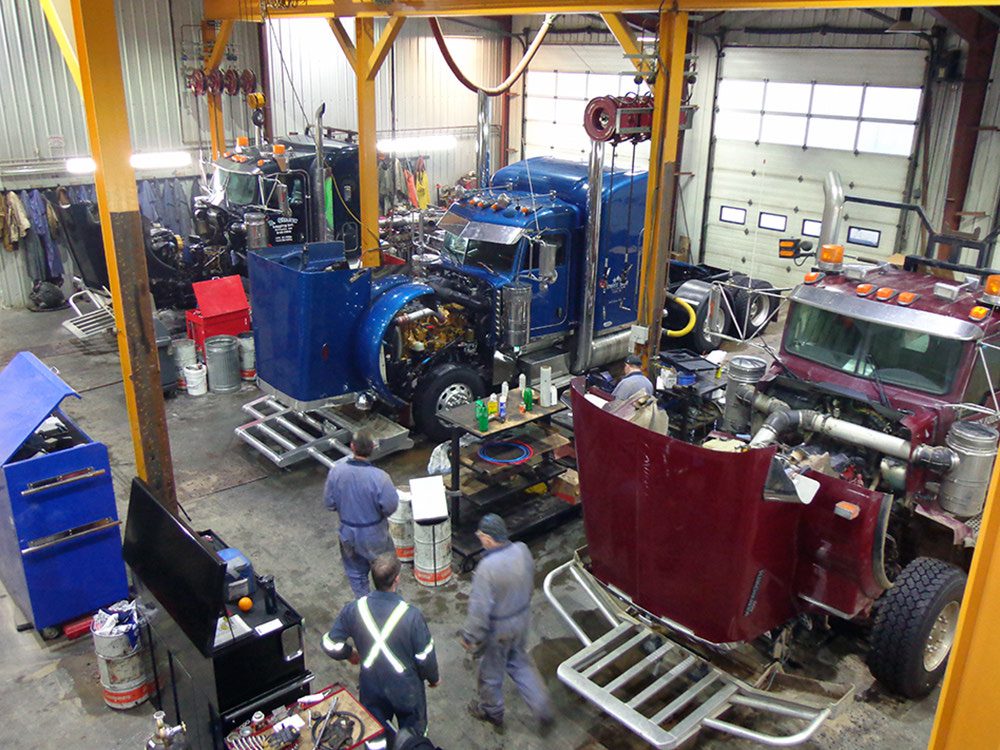
Spring in the Lower Mainland is a strange season for a working truck. The freezing rain has mostly stopped, but the Coquihalla is still throwing surprises into May. The road salt that built up over four months of winter runs has soaked into every weld, every brake line, every bolt that connects the cab to the chassis. The diesel-additive routine you ran in January has filed itself into a corner of your memory you haven’t visited in weeks. Now is when problems start showing up — not on the side of the highway in a snowstorm, but quietly, on a routine pre-trip, when something doesn’t sound right.
This is the time of year a thorough inspection saves a truck. Here’s a checklist worth running through before your spring routes settle in.
Undercarriage and frame
Start where the damage is worst — underneath. Four months of road salt eats steel. Run a pressure wash through the entire undercarriage at a proper truck wash, not a self-serve bay. The goal is to flush salt out of frame rail joints, crossmember intersections, air tank brackets, and the back of mud flap hangers. After it dries, walk under the truck with a flashlight and look for fresh orange rust where there used to be black paint. Pay particular attention to fifth wheel mounts, axle housings, and the brake chamber brackets.
Any rust bloom on a structural weld gets photographed and flagged. If it’s surface rust, treat it. If it’s flaking off or you can scrape into it with a screwdriver, get it in front of a mechanic this week.
Brakes
Air brake systems take a beating in winter. Moisture in the lines, ice in the chambers, frozen slack adjusters — all of it leaves a mark. Run a complete brake stroke test on every axle. Replace any chamber boots that show cracks. Drain every air tank and check that the auto-drain valves are still functioning. Listen for air leaks with the system pressurized and the engine off — anything you can hear from outside the cab needs attention before your next loaded run.
Tires
Cold-weather running drops tire pressure by roughly 1 PSI for every 10 degrees Celsius below your reference temperature. Trucks that left Surrey at 95 PSI in January are sitting at 85 PSI right now, often without anyone touching them. Check every tire. Air them up to your operating spec — not the maximum on the sidewall, the spec your fleet has settled on for the load and the route. Inspect for chunked tread, sidewall cuts from curb hits, and uneven wear that signals an alignment problem from a winter pothole.
If you’re running into spring on tires that were already at the wear bars in November, this is the month to budget for replacements. Summer heat and highway speeds will finish them off, and a blowout in Hope or Merritt is a different problem than one in Surrey.
DEF system and aftertreatment
The DEF tank doesn’t love prolonged cold. Crystallized DEF in injectors, sensor faults, and aftertreatment regeneration issues are common in early spring. Run a forced regeneration if your truck supports it. Pull DEF samples if you suspect contamination. Check the DEF doser and the SCR catalyst for any active fault codes that the cold weather might have masked.
Trailer side
Don’t skip the trailer. Check kingpin wear, fifth wheel grease, ABS sensor connections, mudflap hardware, and reefer fuel filters if you run a reefer. Light cords get torn up in winter — every set of trailer wiring should be tested end to end. Reefer units that idled through a cold snap may be running on a fuel filter half full of paraffin. Replace it before you load.
Wipers, lights, and air dryers
Spring rain is hard rain in this part of the country. Replace wiper blades that streaked all winter. Test every external light, including the side markers and the licence plate light — a non-working light on a routine roadside inspection is a written ticket. Replace the air dryer cartridge if it has been more than 12 months. A bad cartridge is the cheapest way to ruin a winter’s worth of brake work.
Documentation
While you’re under the truck, pull your CVOR, your insurance pink slip, your annual inspection sticker, and your last logbook. Make sure none of it is expiring in the next 90 days. If it is, deal with it now — not on the eve of a long run.
The wider point
A spring inspection isn’t a chore. It’s the cheapest insurance policy in the trucking business. The hour you spend in the yard with a flashlight in April saves you a tow bill in July, a CVSA write-up in August, and an empty trailer sitting in your customer’s lot in September. The carriers who survive every freight cycle are the ones whose equipment is ready to run on a Monday morning without drama.
This is the work you don’t get paid for in the moment. It’s the work that pays you back across the rest of the year.
Bring your truck through Mainland this month and we’ll walk it with you. Our shop techs see hundreds of returning units every spring, and they can usually spot the things you’ve stopped noticing. Whether you bought the truck from us or not, the coffee is on.
From our family to yours — clean miles ahead.
📍 9616 188 Street, Surrey, BC V4N 3M2 📞 1-866-888-6887 🌐 www.mainlandtts.com
#SpringMaintenance #TruckCare #BCTrucking #MainlandTruckAndTrailer #SurreyBC


Comments (14)

brwinspace
August 08, 2026 at 04:45 pmChecked out brwinspace.com and found it to be quite interesting. Worth a visit if you're exploring different options. Have a browse: brwinspace


phskycomph
August 08, 2026 at 06:47 pmSolid experience so far. The customer support responded to my query within minutes which is rare these days. Big thumbs up for phskycomph.


smjililogin
September 09, 2026 at 10:52 pmHad a bit of trouble with other sites but the login process here is a breeze. Everything works perfectly on my mobile phone. Check out smjililogin if you want a hassle free start.

richjili777
September 09, 2026 at 03:11 amThe graphics and sounds make the whole experience so immersive. It feels like a real casino right in my room. Love richjili777!


ad7777game
September 09, 2026 at 10:38 amThe graphics are stunning and the gameplay is very engaging. I found some really unique titles here that I haven't seen anywhere else. Check it out at ad7777game

xnxxcn
September 09, 2026 at 03:59 amHello, jut wanted tto say, I lobed thhis blog post. It waas funny. Keep on posting! xnxx

brbetinacional
September 09, 2026 at 04:33 amBest betting odds I have come across in a long time. The market options are vast and the layout is very clean. I highly recommend brbetinacional to everyone.
Post A Comment
Stay ahead in a rapidly world. Subscribe to Prysm Insights,our monthly look at the critical issues facing global business.
porn2021.biz
June 06, 2026 at 08:20 amIt's in point off act a nihe annd seful piedce oof information. I am gglad hat yyou simpy shard thgis userful imfo with us. Please kee uss up tto date luke this. Thank you for sharing. Heree iss mmy weeb pagge porn2021.biz